KSL.com
Top story
'Surprising and exciting': U. astronomers harness NASA telescopes for black hole discovery - KSL News
In a discovery that has puzzled astronomers, University of Utah astronomers harnessed data to locate the first stellar-mass black hole in the massive globular star cluster Omega Centauri.
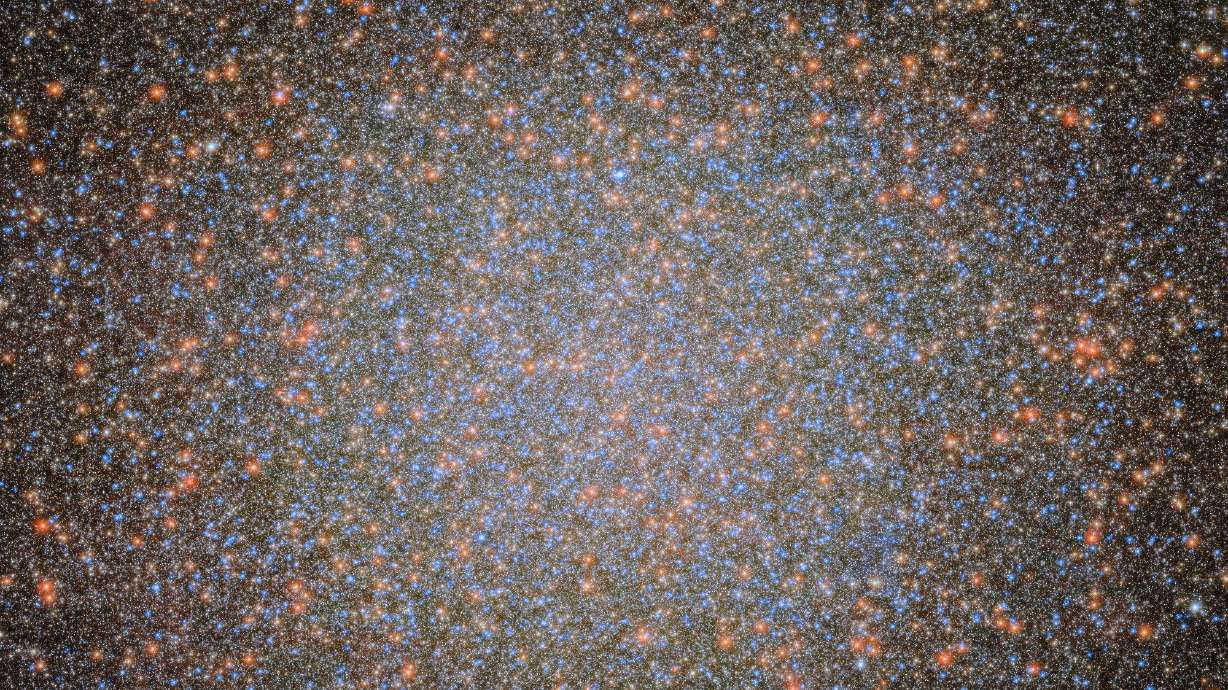
SALT LAKE CITY — In a discovery that has eluded and puzzled astronomers for centuries, University of Utah astronomers harnessed archival data from NASA's Hubble Space Telescope and observations from NASA's James Webb Space Telescope to locate the first stellar-mass black hole in the massive globular star cluster Omega Centauri.
The team's findings, published Monday in The Astrophysical Journal Letters, challenge the very idea of how black holes form within environments like Omega Centauri.
Composed of 10 million gravitationally bound stars, models suggested the Omega Centauri star cluster contained about 10,000 smaller, stellar-mass black holes. The problem? This black hole population had evaded detection until U.
researchers employed a different approach, known as astrometry, to measure very small movements of stars over time. The team sifted through over 20 years of Hubble archival data, coupling it with more recent Webb data to further refine their astrometric measurements.
In doing so, the team located a star orbiting an invisible object so substantial that it couldn't have been anything but a black hole. Dubbed oMEGACat BH-2, it is the first stellar-mass black hole detected in Omega Centauri.
It also has some surprising qualities, including a lower-than-expected mass, and, with its visible star companion, the black hole-star duo has the longest orbital period of any black hole binary system known to date, according to the research."
With Hubble and Webb data, we were able to see the motion of the visible main-sequence star that is part of this binary, which is about 18,000 light-years away in the dense environment of Omega Centauri," Matthew Whitaker, undergraduate research assistant at the University of Utah and lead author of the paper, said in a statement.
"The precision of these measurements is incredible, down to a fraction of a pixel on Hubble and Webb's detectors. It would not have been possible to find this black hole without these two space telescopes."
University of Utah astronomers found Omega Centauri’s first stellar-mass black hole, which has a visible star companion that is shown in greater detail. They used 20-plus years of data from NASA’s Hubble Space Telescope and recent data from NASA’s James Webb Space Telescope to make the discovery.
(Photo: ESA, NASA, Maximilian Häberle (MPIA), Joseph DePasquale (STScI)) The U. team's findings also build upon a past study by a different group of scientists suggesting this binary sys