BBC News
Top story
'Moment of joy' as Uganda discharges last Ebola patient
The good news from Uganda comes as the WHO chief warns the virus in DR Congo is spreading fast.
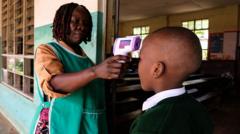
The last patient being treated for Ebola in Uganda has been discharged from hospital, leaving the country with no active confirmed cases of the deadly disease. At a ceremony marking the occasion Health Minister Dr Chris Baryomunsi described it as "a moment of joy".
The first case of this outbreak in Uganda was confirmed in May. He was a man who had travelled for treatment from neighbouring Democratic Republic of Congo, the epicentre of the epidemic where almost 800 people have died.
In his latest briefing on the outbreak, World Health Organization (WHO) chief Tedros Adhanom Ghebreyesus said it was now the world's third‑largest on record and was spreading at an alarming speed in DR Congo.
He warned it was happening more quickly than any previous outbreak and that 80% of new cases in DR Congo were from previously unknown transmission chains. What is Ebola and why is stopping the latest outbreak so difficult?
In Uganda, a 42-day countdown has now begun before it can officially be declared Ebola-free, as long as no new infections emerge. "It demonstrates that with early detection, prompt treatment and a strong health system, Ebola can be defeated," the health minister said.
Nevertheless, his ministry has urged people to "remain vigilant". "If you develop symptoms such as fever, vomiting, diarrhoea or unexplained bleeding, seek immediate medical care," it said in a statement on X. In all, Uganda recorded 20 confirmed cases, mostly among visitors from DR Congo, and two deaths.
Uganda has experienced several Ebola outbreaks over the last two decades and now has well established protocols to deal with the virus. These include isolation of suspected cases and contact tracing as well as targeted public health messages.
There have been more than 2,000 confirmed infections and 796 deaths in DR Congo, according to government data. But it is thought that it could have been in the community undetected for months before the outbreak was officially declared two months ago.
"About two-thirds of deaths are occurring in communities, among people who never receive care in a health facility," the AFP news agency quotes Tedros as saying at a briefing at the WHO headquarters in Geneva. Earlier this week, a WHO official said the true number of infections could be four times larger than recorded.
There are currently no vaccines or approved treatments for this rare Bundibugyo species of Ebola and health workers in DR Congo are playing catch up with not enough beds for the ill, not enough contact tracing and testing. They also face suspicion from local communities, in a region with active armed conflict.
The WHO wants $115m (£85m) to tackle the outbreak - so far it has received just $45m. "This is not charity, it's an investment in national security," Tedros said, asking donor countries to step up. Previously, they had been able to enter at select airports, where they went through a screening process.
Ebola is caused by a virus which attacks the body's immune system and organs. It normally infects animals, typically fruit bats, but outbreaks among humans can sometimes start when people handle infected animals. It is spread through bodily fluids like blood.
Additional reporting by Swaibu Ibrahim in Kampala Recovery of Ebola patients offers rare moments of joy at epicentre of outbreak Three Ebola vaccines in development amid growing outbreak fears 'I buried my parents one day after the other' - Ebola mourners learn how to grieve safely Ebola misinformation fuels violent attacks on health workers Go to , external for more news from the African continent.